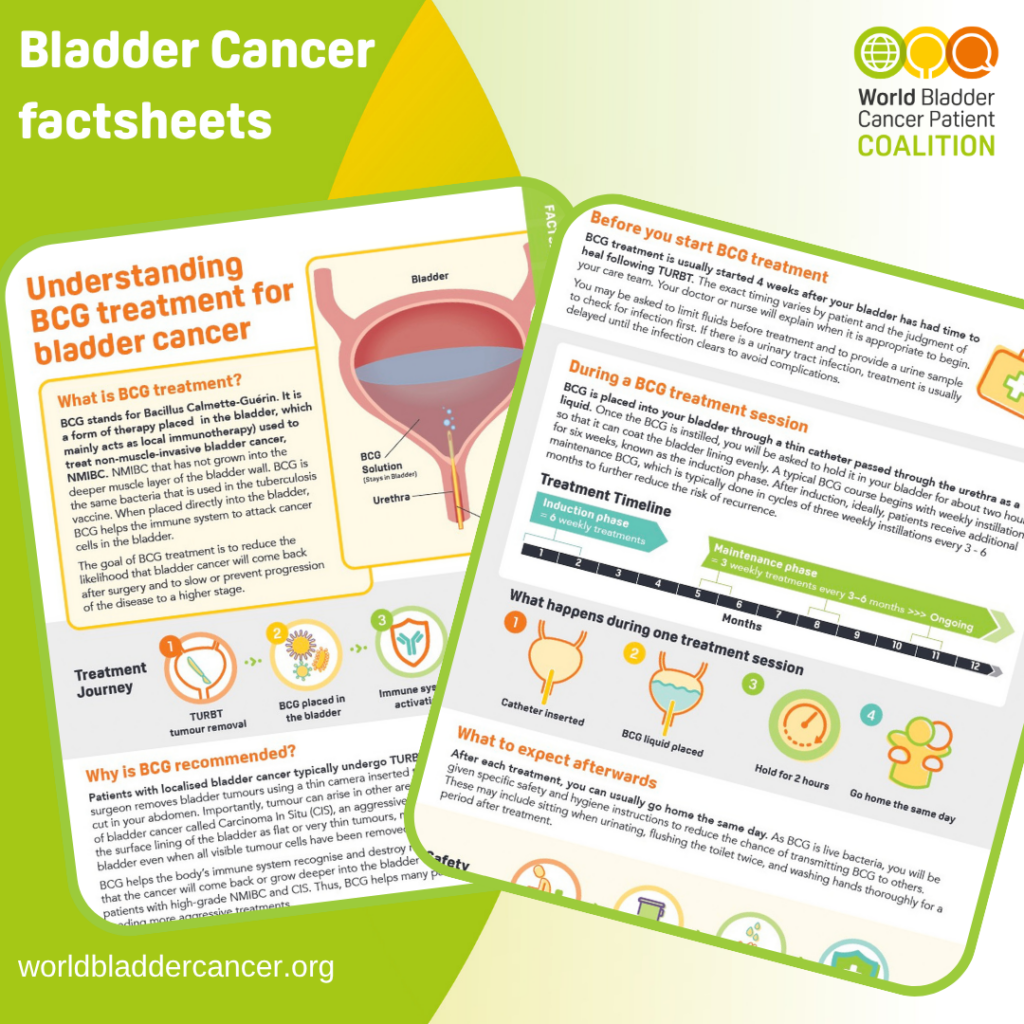
We are pleased to launch a new factsheet titled “Understanding BCG treatment for bladder cancer”, the third in our series of patient factsheets. This resource is designed to help people affected by bladder cancer, together with their carers, understand Bacillus Calmette-Guérin (BCG), one of the most widely used treatments for non-muscle-invasive bladder cancer (NMIBC).
The factsheet is developed as a decision-aid tool to help people newly diagnosed with bladder cancer have an informed conversation with their treating doctor or nurse.
By Prof Bente Thoft Jensen, Prof Shingai Mutambirwa and Alessandro Boni.
Bladder cancer affects the very organ responsible for storing urine and controlling when and how we pass it. So it should come as no surprise that many people living with this disease face real challenges with bladder and bowel control. And yet this is one of the last things that gets talked about, in clinics, in research and in public.
Each year in June, Men’s Health Week brings global attention to the health challenges men face, while encouraging action and awareness for better well-being. Running from 15 to 21 June 2026, this year we join the conversation to shine a light on bladder cancer – a disease that disproportionately affects men, but remains under-recognised.
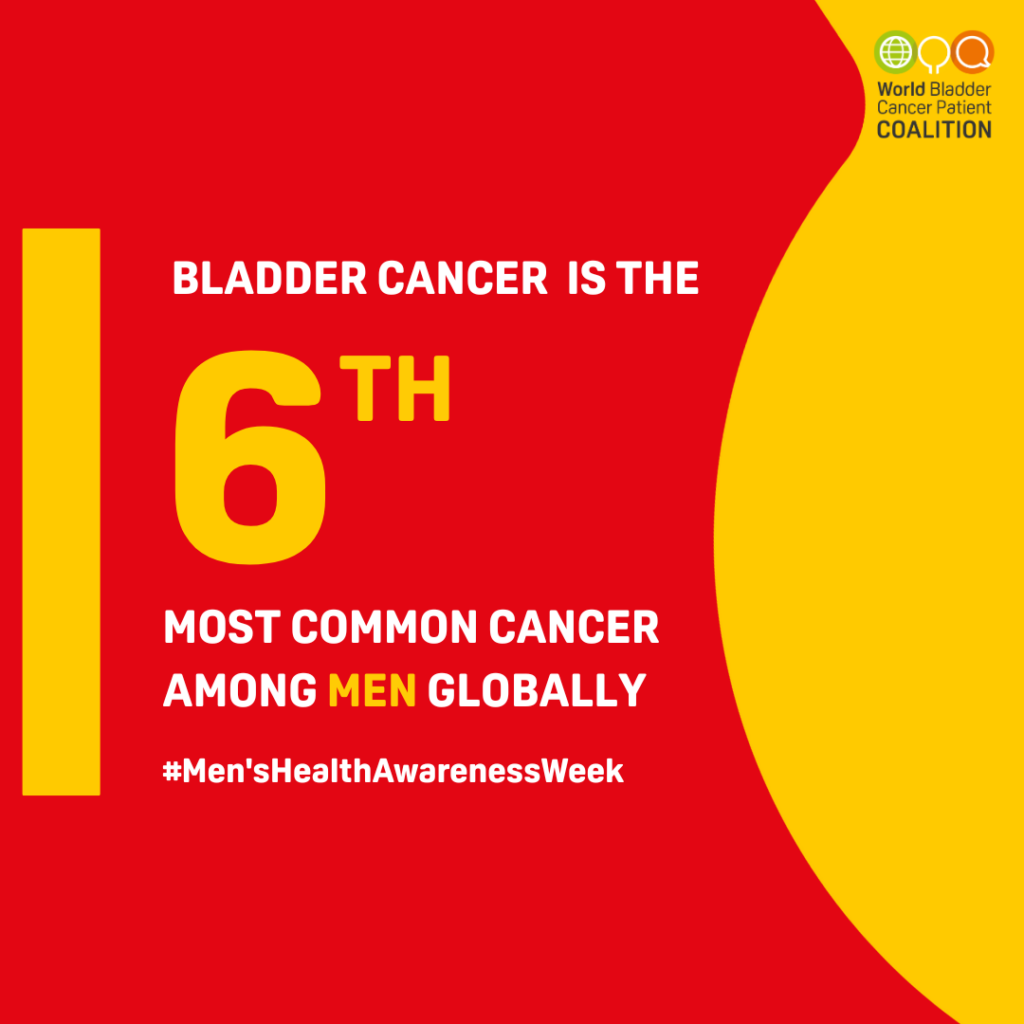
Bladder cancer is the sixth most common cancer among men worldwide. Men are four times more likely than women to be diagnosed with the disease in their lifetime.
Today marks the start of World Continence Week 2026, running from 15 to 21 June. For the millions of people affected by bladder cancer, this week is a powerful reminder that urinary symptoms are not something to simply endure in silence.
Urinary incontinence is one of the most commonly reported side-effects of bladder cancer treatment, yet it remains one of the least discussed. Troublesome urinary symptoms, including burning and irritation when peeing, accidental leakage,
Throughout May, communities worldwide have been actively raising awareness about bladder cancer. Through social media initiatives, local events, and walks, and the Unsure Icon, organisations have helped guide those affected by bladder cancer to resources and support.
This May also marks the final year of our three year global awareness campaign, “Feeling Unsure? Get Checked.” Over these three years, the campaign has urged individuals not to dismiss symptoms or wait for them to escalate,
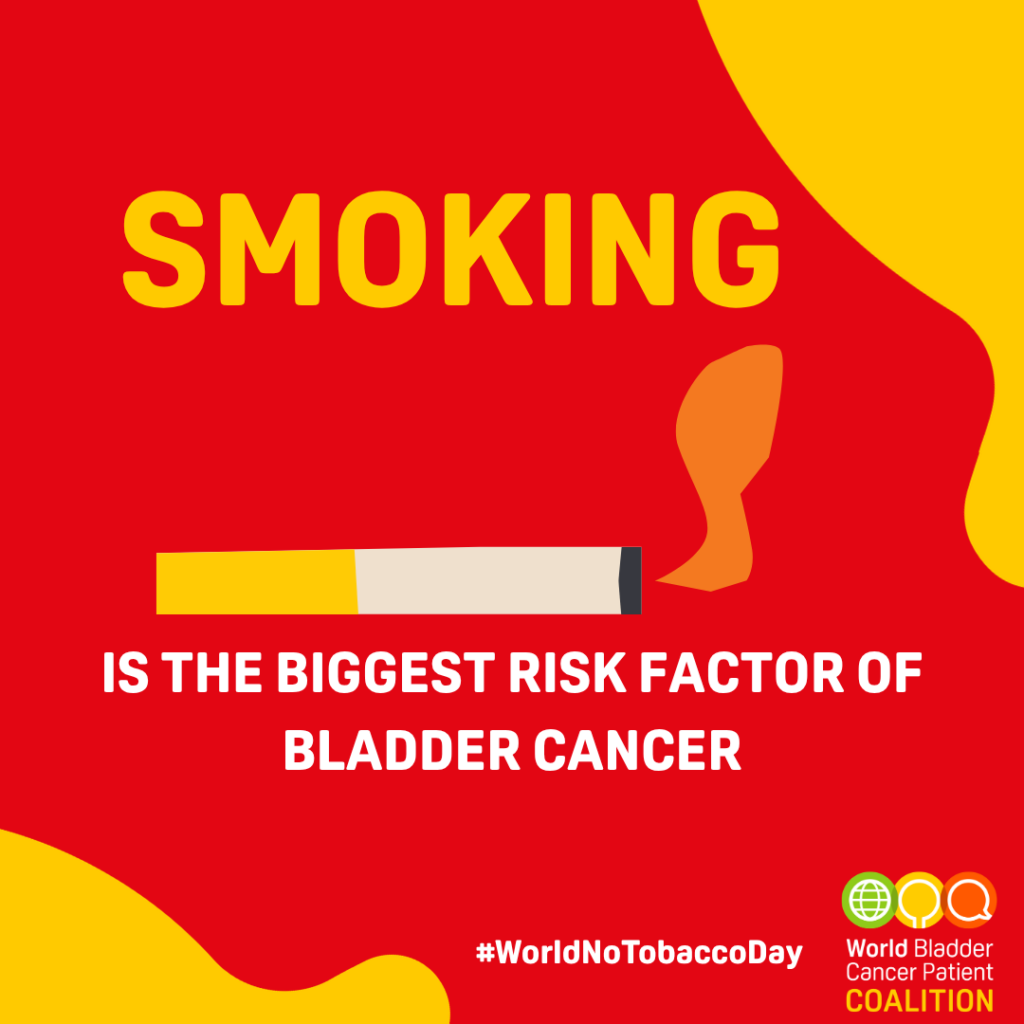
May 31, 2026 is World No Tobacco Day. Tobacco use ranks among the world’s leading causes of death. The World Health Organization (WHO) estimates that more than 8 million deaths per year are attributed to tobacco use, including more than 1.2 million deaths among nonsmokers exposed to secondhand smoke.
Around the world, over 610,000 people are diagnosed with bladder cancer, 1.9 million people find themselves living with this condition and it is the 13th cause of death from cancer globally.
Each year, more than 610,000 people worldwide are diagnosed with bladder cancer, yet awareness of the disease remains critically low. Too many people still do not recognise the symptoms and signs such as blood in the urine are often ignored, misunderstood, or mistaken for other conditions, delaying diagnosis and treatment.
This May marks the final year of our three-year global awareness campaign, “Feeling Unsure? Get Checked.” Throughout the campaign,
May is Bladder Cancer Awareness Month 2026, and this year marks the final chapter of our three-year global campaign, “Feeling Unsure? Get Checked.”
Across the world, people affected by bladder cancer, healthcare professionals, advocates, organisations, carers, and supporters are coming together to help raise awareness of bladder cancer symptoms and encourage earlier diagnosis.
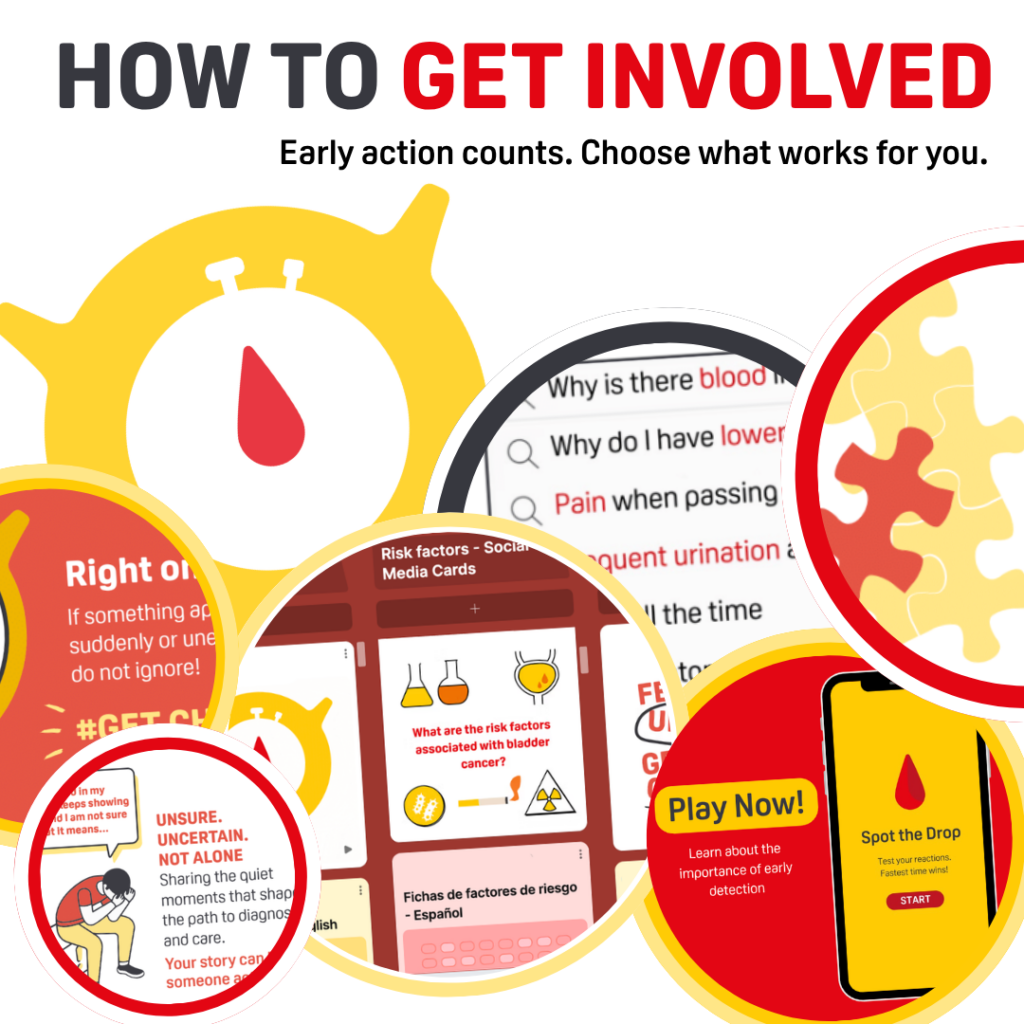
The good news? Taking part does not have to be complicated. Whether you have one minute or one hour,
This May, during Bladder Cancer Awareness Month, the World Bladder Cancer Patient Coalition (WBCPC) is inviting people around the world to take part in two new initiatives that support one simple but important message:
Feeling unsure? Get checked.
Bladder cancer symptoms, especially blood in the urine, are too often ignored, misinterpreted, or dismissed. Many people delay speaking to a healthcare professional because they feel unsure, embarrassed, or assume it is something less serious.
Today marks the start of Bladder Cancer Awareness Month 2026 and the final chapter of the global campaign Feeling Unsure? Get Checked. This campaign focuses on a simple but often overlooked reality: many people delay seeking care because symptoms feel uncertain.
“I thought it was just a UTI.”
“Blood in my urine once. That was my warning sign.”
“I didn’t know it meant bladder cancer.”
These moments of hesitation are common,