On 14th December, the International Agency for Research on Cancer (IARC) has published the updated GLOBOCAN 2020 with new estimates on the global cancer burden, indicating that it has risen to 19.3 million cases and 10 million cancer deaths in 2020.
The International Agency for Research on Cancer estimates that globally, 1 in 5 people develop cancer during their lifetime, and 1 in 8 men and 1 in 11 women die from the disease.

The World Bladder Cancer Patient Coalition was invited to join the World Health Organization’s Informal consultation on people living with non-communicable diseases (PLWNCDs). The three-day meeting brought together WHO experts and over 100 participants from civil society organisations, patient groups and people living with NCDs.
The goal of the informal consultation was to listen to the community and explore ways to create meaningful engagement opportunities for PLWNCDs within the workstreams of the WHO.

The World Bladder Cancer Patient Coalition is proud to endorse the European Code of Cancer Practice (The Code). Launched recently by the European Cancer Organisation, The Code is a citizen and patient-centred statement of core requirements for good clinical cancer practice, to improve outcomes for all of Europe’s cancer patients.
The Code sets out ten key overarching rights, signposting what patients should expect from their health system, for them to achieve the best possible outcomes.

The ‘Putting bladder cancer on the global health policy agenda’ report is a summary of the presentations and dialogue at WBCPC 2020 Virtual Annual Meeting, held in September. We have brought together leaders in bladder cancer research, advocacy, patient organisations and the pharmaceutical industry. Participants from 25 countries worldwide have joined us to explore the topic: What action is needed to place bladder cancer higher on the global health policy agenda?
We have organised this report around three themes that drive the WBCPC strategy: Building Community,
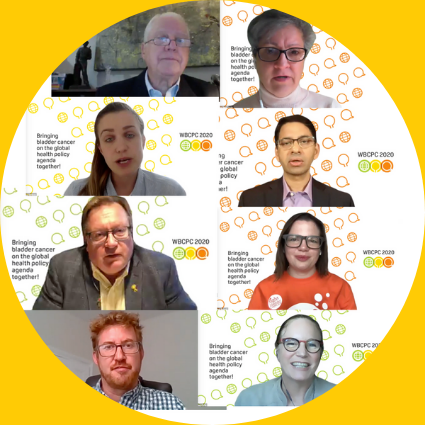
***This article is the second of a two-article series which summarises the experiences shared at the WBCPC 2020 Virtual Annual Meeting.
How advocacy helps progress bladder cancer research in the US: an example for inspiration?
Even as the voice of bladder cancer patients is under-represented in many countries today, Dr Stephanie Chisolm, Director of Education and Research, Bladder Cancer Advocacy Network (BCAN), says that science and pharmaceutical innovation to control the disease have progressed steadily since 1900 – and patient perspectives have been present along this entire pathway.

As representatives of nine global cancer coalitions and alliances, representing 750 patient advocacy and other cancer organisations and the interests of over 14 million patientsi around the world, we have united to share the following statement on COVID-19 and call for a global plan of action for cancer to meet the challenges of future pandemics or health crises.
Although in some countries we are seeing encouraging signs that the worst phase of the pandemic is coming to an end albeit with concerns about a potential second wave,

The World Bladder Cancer Patient Coalition has published a report on The Impact of COVID-19 on Cancer Patient Organisations. This report is the work of five global cancer patient coalitions, representing around 400 organisations. It demonstrates the enthusiasm and willingness to collaborate at a very challenging time, to develop and strengthen calls to action, to learn from each other and support those we work with and communities we serve.
As this report shows,